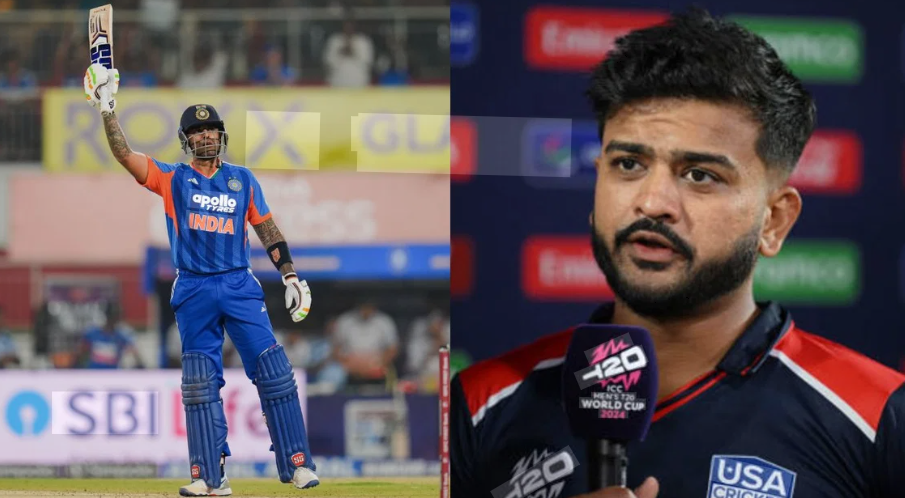
Cricket has evolved into a global sport where emerging teams are now sharing the same stage as established giants. The contrast between a well-structured cricketing nation and a developing side creates an interesting sporting narrative filled with learning, pressure, and growth. When these two teams are compared through stats, scorecards, and performance trends, the difference in experience, depth, and execution becomes clearly visible. Yet, modern cricket has also reduced these gaps through exposure and global leagues. This analysis explores their journey, performance patterns, and competitive dynamics through structured breakdowns, match flow understanding, and tactical insights that define their cricketing identities on the international stage.
Latest Matches Table
Date
Tournament
Venue
Winner
First Innings Score
Second Innings Score
Margin
07 Feb 2026
T20 World Cup
Mumbai
India
161/9
132/8
29 runs
12 Jun 2024
T20 World Cup
New York
India
110/8
111/3
7 wickets
Play Data
Unavailable
None
None
None
None
None
Play Data
Unavailable
None
None
None
None
None
Play Data
Unavailable
None
None
None
None
None
Play Data
Unavailable
None
None
None
None
None
Team Statistics Summary Table
Format
Total Matches
India Wins
USA Wins
Draws Or Ties
India Maximum Runs
USA Maximum Runs
T20 Internationals
2
2
0
0
161
132
One Day Internationals
0
0
0
0
0
0
Test Matches
0
0
0
0
0
0
Overall Combined
2
2
0
0
161
132
Play Data
0
0
0
0
0
0
Play Data
0
0
0
0
0
0
Individual Batting Records Table
Player Name
Team
Innings Played
Total Runs
Highest Score
Batting Strike Rate
Fours Hit
Suryakumar Yadav
India
2
134
84
143.91
12
Sanjay Krishnamurthi
USA
1
37
37
119.35
1
Shubham Ranjane
USA
1
37
37
168.18
2
Milind Kumar
USA
1
34
34
100.00
3
Shivam Dube
India
2
31
31
60.78
1
Nitish Kumar
USA
1
27
27
117.39
2
Individual Bowling Records Table
Player Name
Team
Overs Bowled
Runs Conceded
Wickets Taken
Economy Rate
Best Bowling Figures
Arshdeep Singh
India
8
27
6
3.37
4/9
Shadley van Schalkwyk
USA
4
25
4
6.25
4/25
Mohammed Siraj
India
8
54
3
6.75
3/29
Hardik Pandya
India
8
48
2
6.00
2/14
Saurabh Netravalkar
USA
8
83
2
10.37
2/18
Harmeet Singh
USA
8
50
2
6.25
2/26
Early Foundations of Two Uneven Cricket Worlds
Cricket developed in two very different sporting environments, creating a natural imbalance when comparing these sides. One nation built a deep cultural connection with the game over decades, turning it into a national passion supported by strong domestic systems, stadium infrastructure, and a vast talent pipeline. The other side grew slowly, influenced by immigrant communities, limited exposure, and a developing sports ecosystem that was still searching for stability. This contrast shaped how both teams approached international competition. One relied on instinct, experience, and pressure-tested systems, while the other focused on gradual growth and learning through exposure. The difference in professional depth became visible in almost every department of the game, from batting confidence to bowling discipline. Over time, this gap started to narrow slightly as global leagues and international exposure created new learning opportunities. However, the early foundation still plays a major role in shaping expectations whenever these two teams step into the same competitive space.
Aspect
India Cricket System
USA Cricket System
Key Difference
Development Stage
Domestic Structure
Strong
Developing
Experience gap
Mature vs Growing
Player Base
Large
Limited
Talent pool size
Established vs Emerging
Infrastructure
Advanced
Improving
Facility quality
High vs Moderate
Global Exposure
Frequent
Occasional
Match experience
Consistent vs Limited
First Glimpses of Competitive Distance Between Teams
When both sides appeared in international tournaments, the contrast in readiness was immediately visible. One team entered matches with confidence built from years of high-pressure encounters, while the other was still adapting to elite-level consistency. Even in limited opportunities, the gap in tempo, decision-making, and execution stood out. The stronger side often controlled the rhythm of the game through disciplined batting and tactical bowling changes. The developing side showed moments of promise but struggled to maintain pressure across full innings. These early encounters were less about rivalry and more about exposure and learning. However, they laid the foundation for future competitive expectations. Every meeting highlighted the importance of experience in shaping outcomes. As global cricket expanded, these differences became less extreme, but the early contrast still defines the narrative whenever these teams are compared on the international stage.
Match Phase
Stronger Team Approach
Developing Team Approach
Pressure Level
Outcome Trend
Powerplay
Controlled aggression
Cautious start
High
One-sided
Middle overs
Rotation dominance
Survival focus
Medium
Gradual shift
Death overs
Finishing strength
Defensive play
Very high
Control loss
Fielding
Sharp execution
Inconsistent
High
Advantage strong side
Rise of a Global Cricket Powerhouse
Over time, one side transformed into a dominant force in world cricket through structured planning, talent development, and strategic innovation. The rise was not sudden but built on consistent performances across formats and conditions. Batting depth became a key strength, with multiple players capable of shifting momentum within a few overs. The bowling unit evolved into a balanced mix of pace and spin, capable of adapting to different pitch conditions. Tactical awareness improved significantly, especially in limited-overs formats where decision-making under pressure is crucial. Leadership also played a major role, guiding younger players and maintaining consistency in high-stakes matches. This evolution turned the team into a benchmark for excellence, often setting standards that others aimed to follow. The combination of skill, fitness, and mental strength created a unit that rarely lost control once it gained momentum in a match situation.
Category
Strength Level
Key Feature
Impact on Game
Consistency
Batting
High
Deep lineup
Big totals
Very stable
Bowling
Balanced
Variety attack
Wicket control
Reliable
Fielding
Elite
Sharp reflexes
Saves runs
Consistent
Strategy
Advanced
Adaptive plans
Match control
Strong
Building Phase of the USA Cricket Structure
The growth of cricket in the United States followed a different path, shaped by multicultural influence and gradual development programs. Many players brought experience from different cricketing nations, adding diversity to the squad’s playing style. The team relied heavily on T20 leagues and overseas exposure to improve skill levels and match awareness. While the foundation was still developing, there was visible progress in batting confidence and bowling variations. However, consistency remained a challenge, especially against top-tier opposition. Fielding standards improved over time, but pressure situations often exposed gaps in execution. Despite these challenges, the growth trajectory has been steady, supported by increasing investment and global interest in expanding the sport. The focus has been on building a competitive identity rather than immediate dominance, which makes every international appearance an important step forward in long-term development.
Area
Current Level
Improvement Focus
Strength Point
Challenge
Batting
Moderate
Consistency
Power hitters
Stability
Bowling
Developing
Accuracy
Variety
Control
Fielding
Improving
Coordination
Athleticism
Errors
Experience
Limited
Exposure
League play
Pressure handling
Tactical Mismatch in First Major Competitive Encounter
In a high-intensity meeting scenario, the tactical differences between the two sides become extremely visible. One team approaches the game with structured planning, calculated aggression, and strong adaptability, while the other relies on individual brilliance and experimental combinations. The opening overs usually set the tone, with disciplined bowling creating early pressure on the developing batting unit. In contrast, the stronger batting lineup tends to build innings through partnerships and controlled risk-taking. Middle overs often become the turning point, where experience allows one side to rotate strike efficiently and accelerate at the right moments. The developing side struggles to maintain pressure, especially when wickets fall in clusters. Death overs further widen the gap due to finishing strength and execution under pressure. Tactical decisions such as field placement and bowling changes play a crucial role in shaping the final outcome.
Phase
Strong Team Strategy
Developing Team Strategy
Execution Quality
Match Impact
Powerplay
Early pressure
Defensive start
High vs Medium
Advantage strong
Middle overs
Rotation control
Wicket survival
Strong vs Weak
Momentum shift
Death overs
Aggressive finish
Restrictive field
High vs Low
Score gap
Captaincy
Proactive
Reactive
Advanced vs Basic
Key factor
Batting Performance and Score Flow Comparison
Batting remains one of the most decisive factors when comparing both sides in any competitive scenario. One team consistently builds innings through structured partnerships, allowing acceleration in later overs. Their top order is capable of handling pace and spin with equal confidence, while the middle order provides stability under pressure. On the other side, batting often depends on early momentum and isolated performances rather than sustained partnerships. When wickets fall early, the scoring rate tends to slow significantly, making recovery difficult. In contrast, the stronger batting unit maintains a steady flow of runs even during pressure phases. Strike rotation, boundary conversion, and situational awareness play a major role in defining innings progression. Score patterns usually reflect this difference clearly, with one side showing controlled acceleration and the other showing irregular spikes in scoring.
Batting Phase
Strong Side Output
Developing Side Output
Stability
Run Flow Pattern
Powerplay
Solid start
Unstable start
High vs Low
Controlled vs Erratic
Middle overs
Steady build
Inconsistent
Strong vs Weak
Balanced vs Patchy
Death overs
High acceleration
Limited finish
Very high vs Low
Explosive vs Flat
Partnerships
Long stands
Short stands
Strong vs Weak
Continuous vs Broken
Bowling Contrast and Pressure Execution
Bowling effectiveness often determines how competitive a match becomes between unevenly matched sides. One team possesses a well-balanced attack that combines pace variation, spin control, and disciplined line-length execution. Their bowlers are trained to maintain pressure across all phases of the innings, forcing errors from batters. On the other side, the bowling unit is still developing its consistency, often relying on individual spells rather than sustained pressure. While there are moments of brilliance, maintaining accuracy across 20 overs remains a challenge. In high-pressure situations, the experienced bowling unit executes plans more effectively, especially in death overs where margins are tight. Field placements and bowling changes are used strategically to control scoring rates. The developing side shows improvement in variation but still struggles with execution under sustained pressure.
Bowling Phase
Experienced Unit
Developing Unit
Control Level
Wicket Efficiency
Powerplay
Tight lines
Loose spells
High vs Medium
Early breakthroughs
Middle overs
Spin control
Mixed accuracy
Strong vs Weak
Occasional success
Death overs
Precision execution
Expensive overs
High vs Low
Match defining
Variations
Tactical use
Inconsistent
Advanced vs Basic
Impact factor
Conclusion
The comparison between these two cricketing sides highlights how structure, experience, and exposure shape results at the international level. One team continues to set benchmarks with consistency, depth, and tactical maturity, while the other steadily builds its identity through learning and adaptation. Scorecards often reflect this gap, but they also show progress in key areas like batting confidence and bowling variation. As global cricket expands, the distance between established and developing teams is gradually reducing. Future encounters may bring more balanced contests, offering opportunities for competitive growth, stronger performances, and a more dynamic cricketing relationship on the world stage.