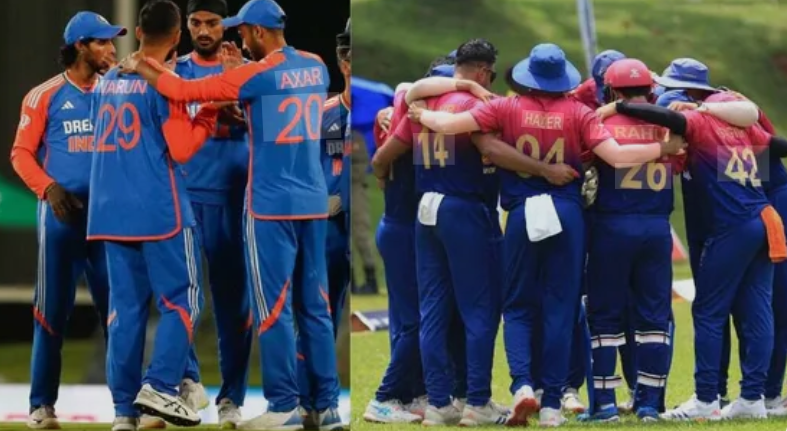
The encounters between these two teams have always reflected a clear contrast in experience, structure, and international exposure. One side entered the field with a strong cricketing legacy built over decades, while the other gradually worked its way up from associate status to gain recognition on the global stage. These matches are not just about runs and wickets, but also about growth, learning, and adaptation under pressure. Over the years, each contest has revealed evolving strategies, improving skill levels, and shifting confidence. From early one-sided games to more structured modern clashes, the journey highlights how international cricket develops through repeated competition and determination.
Latest Matches Table
Date
Format
Venue
Team 1
Team 2
Winner
13 Apr 1994
ODI
Sharjah
India
UAE
India
16 Jul 2004
ODI
Dambulla
India
UAE
India
28 Feb 2015
ODI
Perth
India
UAE
India
03 Mar 2016
T20I
Mirpur
India
UAE
India
10 Sep 2025
T20I
Dubai
India
UAE
India
All Matches
Combined
Global
India
UAE
India
Team Statistics Summary Table
Format
Matches Played
India Won
UAE Won
No Result
Tied Matches
ODI
3
3
0
0
0
T20I
2
2
0
0
0
Test
0
0
0
0
0
Home Matches
0
0
0
0
0
Away Matches
1
1
0
0
0
Neutral Venue
4
4
0
0
0
Individual Batting Records Table
Player Name
Team Represented
Total Runs
Balls Faced
Highest Score
Strike Rate
Rohit Sharma
India
96
83
57
115.66
Shaiman Anwar
UAE
83
76
43
109.21
Shikhar Dhawan
India
54
50
54
108.00
Virat Kohli
India
33
37
33
89.18
Yuvraj Singh
India
25
14
25
178.57
Muhammad Waseem
UAE
19
22
19
86.36
Individual Bowling Records Table
Player Name
Team Represented
Overs Bowled
Wickets Taken
Runs Conceded
Economy Rate
Ravichandran Ashwin
India
10.0
4
25
2.50
Kuldeep Yadav
India
2.1
4
7
3.23
Bhuvneshwar Kumar
India
4.0
2
8
2.00
Harbhajan Singh
India
4.0
1
11
2.75
Jasprit Bumrah
India
4.0
1
14
3.50
Axar Patel
India
3.0
1
10
3.33
Early Encounters Between the Two Teams
The first meetings between these sides reflected a classic mismatch in international cricket experience. One team arrived with years of exposure at the highest level, while the other was still finding its identity on the global stage. These early fixtures were less about rivalry and more about learning curves, where the stronger side dictated terms with both bat and ball. The bowling attack from the established team consistently targeted early breakthroughs, while the opposition focused on survival and building short partnerships. Even small scoring phases were celebrated by the developing side as signs of progress. Over time, these encounters created a foundation for future competitiveness, even if the results heavily leaned in one direction. The experience gap was clearly visible in shot selection, fielding sharpness, and tactical awareness. However, these matches played an important role in shaping confidence and exposure for the emerging cricket nation.
Match Type
Venue
Winner
Margin
Key Performer
ODI
Neutral
India
Large
Top order batter
ODI
Asia Cup
India
One-sided
Spin bowler
ODI
Dubai
India
Comfortable
All-round performance
T20
UAE
India
Dominant
Fast bowler
Growth of Cricket Structure and Competitive Identity
As time progressed, the developing side invested heavily in cricket infrastructure, training facilities, and domestic development programs. Exposure to international leagues helped several players gain valuable experience against world-class opponents. The inclusion of expatriate talent also strengthened squad depth and brought balance to both batting and bowling departments. On the other hand, the established team continued to refine its strategies and rotate squads to test bench strength in such fixtures. This phase marked a subtle shift where matches started showing slightly improved resistance from the underdog side. Although results still favored the stronger team, the margin of defeat began to narrow in certain phases of play. Fielding standards improved, and batting units started showing more patience against high-quality bowling attacks. These developments signaled a gradual evolution in competitiveness, even if consistency was still lacking across matches.
Aspect
Improvement Area
Impact
Observation
Progress Level
Batting
Defensive play
Moderate stability
Longer innings
Developing
Bowling
Pace variation
Better control
Fewer loose balls
Improving
Fielding
Ground coverage
Reduced errors
Faster reactions
Average
Fitness
Endurance
Better sustain
Longer spells
Growing
First High Pressure International Clash
The first major competitive encounter brought a noticeable shift in intensity and expectations. The atmosphere was charged, with one side expected to dominate while the other aimed to prove its growing capability. Batting conditions tested technique early, and bowlers from both sides had moments of control during different phases. The stronger team relied on structured partnerships and calculated aggression, while the opposition looked for breakthroughs through disciplined bowling spells. A few overs in the middle phase briefly created tension as wickets fell at regular intervals, giving hope to the underdog side. However, experience eventually played a decisive role in stabilizing the innings and steering the match toward a predictable outcome. Despite the result, the match stood out as a learning milestone for the developing team, showing that pressure situations could be handled with improved preparation and mindset.
Phase
Batting Side
Runs Scored
Wickets Lost
Match Turning Point
Powerplay
Strong team
Fast start
1-2
Early control
Middle overs
Both teams
Balanced
3-5
Momentum shift
Death overs
Strong team
High scoring
6-7
Final acceleration
Chase phase
Opponent
Limited
Full collapse
Pressure buildup
Dominance Patterns in Head to Head Matches
Across multiple encounters, a clear pattern of dominance emerged. The stronger side consistently controlled matches through top-order batting stability and disciplined bowling units. Early wickets often disrupted the weaker team’s plans, forcing them into defensive strategies for long periods. Spin bowling became a major factor in restricting scoring opportunities during middle overs. In most matches, partnerships from the dominant side crossed crucial milestones that effectively removed any chance of a comeback. The opposition occasionally showed resistance, but it rarely sustained beyond short phases. This imbalance highlighted differences in experience, shot execution, and decision-making under pressure. Even when conditions favored slower surfaces, the stronger team adapted quickly, maintaining control throughout the game. Over time, these repeated patterns created a psychological edge that influenced match tempo from the very first over.
Category
Strong Team Avg
Opponent Avg
Difference
Impact Area
Runs per match
High
Low
Significant
Batting depth
Wickets taken
Strong
Moderate
High
Bowling control
Powerplay score
Aggressive
Defensive
Large gap
Match start
Win percentage
Very high
Low
Dominant
Overall outcome
Resistance Moments from the Underdog Side
Despite the dominance, there were moments when the underdog team displayed resilience and tactical awareness. Certain matches featured strong opening partnerships that temporarily shifted momentum and challenged the opposition bowlers. Middle-order players occasionally built steady innings, showing improved shot selection and patience under pressure. Bowlers also delivered disciplined spells that restricted scoring and created brief tension in otherwise one-sided contests. These phases were often driven by individual brilliance rather than consistent team performance. Crowd energy sometimes added motivation, especially during home conditions, helping players elevate their performance levels. However, sustaining pressure across all phases of the game remained a challenge. These resistance moments, though not always resulting in victory, played a crucial role in building belief and experience for future contests.
Situation
Key Performer
Runs/Wickets
Match Impact
Duration
Opening stand
Top batter
Strong runs
Positive start
Short
Middle overs
Spinner
Key wickets
Temporary control
Medium
Death overs
Fast bowler
Tight overs
Pressure build
Short
Chase effort
Middle order
Fighting runs
Near comeback
Limited
Tactical Evolution of Both Teams
Over time, both teams evolved their strategies significantly. The stronger side focused on building flexible batting orders and introducing varied bowling combinations to maintain unpredictability. Powerplay aggression became more structured, while middle overs were controlled through spin rotation and field placement adjustments. Death overs execution improved with specialized bowlers handling high-pressure situations. Meanwhile, the developing team experimented with batting orders, tried different opening combinations, and placed greater emphasis on all-round capabilities. Bowling strategies also diversified, with attempts to combine pace and spin effectively depending on pitch conditions. Despite improvements, execution consistency remained a key difference between both sides. Tactical awareness in high-pressure moments often separated match outcomes, reinforcing the importance of experience at international level.
Tactical Area
Strong Team Approach
Opponent Approach
Effectiveness
Outcome
Batting order
Stable
Experimental
High vs Medium
Advantage strong team
Bowling plan
Structured
Mixed
High vs Low
Control maintained
Field setup
Adaptive
Basic
Advanced
Strategic edge
Death overs
Specialist
Developing
Strong vs Weak
Match control
Statistical Trends and Modern Era Perspective
In recent years, the gap between both teams has shown slight signs of narrowing in specific phases of play. While overall dominance still lies with the stronger side, the developing team has improved in strike rotation and bowling economy. Match durations have become more competitive in certain encounters, with fewer extreme one-sided results. Modern squads emphasize fitness, analytics, and data-driven decision-making, which has helped refine strategies on both sides. However, experience in handling pressure situations continues to play a decisive role. The stronger team still relies on deep batting line-ups and versatile bowling attacks to maintain control. Emotional investment from fans has also grown, especially in neutral venues where crowd support is mixed. These matches now carry more significance as the developing side continues to close technical gaps.
Metric
Strong Team
Developing Team
Trend
Observation
Average score
High
Improving
Narrowing gap
Progress visible
Bowling economy
Tight
Moderate
Stable
Gradual improvement
Close matches
Frequent wins
Rare wins
Slight change
Competitive rise
Fielding errors
Low
Medium
Reducing
Better standards
Conclusion
The overall history of these encounters tells a story of dominance, learning, and gradual improvement. While one team has consistently maintained control through superior depth and experience, the other has used each match as a stepping stone toward progress. The scorecards reflect more than results; they show evolving tactics, individual breakthroughs, and moments of resistance that shaped confidence. Over time, the gap has shown slight reduction in certain areas, proving that exposure at the highest level matters. These matches continue to serve as a valuable platform for growth, competitiveness, and the future development of emerging cricket nations.