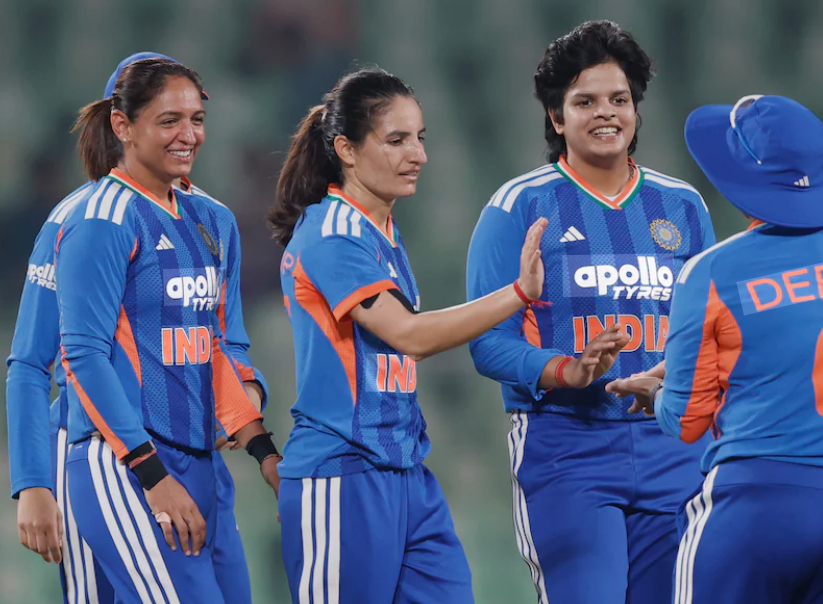
The rivalry between the women’s teams of India and Sri Lanka has developed into a meaningful chapter in international cricket history. From early encounters where experience gaps were clearly visible to modern matches shaped by tactical planning and rising talent, this timeline reflects steady growth on both sides. India has often relied on strong batting depth and disciplined bowling, while Sri Lanka has shown resilience through spin attack and fighting spirit. Over the years, their matches have produced competitive moments, shifting momentum, and individual brilliance. This evolving journey highlights how both teams have contributed to raising the standard of women’s cricket in Asia.
Latest Matches Table
Date
Format
Venue
Winner
Margin
December 30, 2025
T20I
Thiruvananthapuram
India
15 runs
December 28, 2025
T20I
Thiruvananthapuram
India
30 runs
December 26, 2025
T20I
Thiruvananthapuram
India
8 wickets
December 23, 2025
T20I
Visakhapatnam
India
7 wickets
December 21, 2025
T20I
Visakhapatnam
India
8 wickets
September 30, 2025
ODI
Guwahati
India
59 runs
May 11, 2025
ODI
Colombo
India
97 runs
May 4, 2025
ODI
Colombo
Sri Lanka
3 wickets
April 27, 2025
ODI
Colombo
India
9 wickets
October 9, 2024
T20I
Dubai
India
82 runs
All-Time Head-to-Head Record Table
Format
Matches Played
India Women Won
Sri Lanka Women Won
Tied
No Result
India Win %
T20I
31
25
5
0
1
80.65
ODI
36
32
3
0
1
88.89
Test
1
1
0
0
0
100.00
Overall
68
58
8
0
2
85.29
All-Time Batting Leaders Table
Player
National Team
Core Format
Aggregate Career Runs
Top Individual Score
Smriti Mandhana
India
ODI and T20I
657
100-plus
Shafali Verma
India
T20I and ODI
440
79
Chamari Athapaththu
Sri Lanka
T20I and ODI
424
115
Harmanpreet Kaur
India
T20I and ODI
369
68
Jemimah Rodrigues
India
T20I and ODI
353
69
All-Time Bowling Leaders Table
Bowler
National Team
Core Format
Total Match Wickets
Career Best Innings
Deepti Sharma
India
ODI and T20I
42
4 for 16
Radha Yadav
India
T20I
28
4 for 23
Poonam Yadav
India
T20I and ODI
26
3 for 13
Inoka Ranaweera
Sri Lanka
ODI and T20I
24
3 for 21
Rajeshwari Gayakwad
India
ODI and T20I
22
4 for 31
Early Formation Phase of International Encounters
This stage marks the beginning of structured competition where both sides were still building their core squads and learning international match pressure. The focus was on gaining experience, understanding conditions, and developing team balance. One side showed early dominance through stronger batting combinations, while the other relied heavily on spin bowling to control scoring rates. These early matches helped both teams identify key players who would later become central figures. Fielding standards, fitness levels, and tactical awareness were still developing, but the foundation of a long-term rivalry was clearly visible. Even though results were often one-sided, the competitive spirit was strong and laid the groundwork for future closely contested matches.
India Women
Sri Lanka Women
Format
Result
Strong batting lineup
Developing top order
ODI
One-sided win
Spin attack strength
Spin reliance
T20
Controlled chase
Middle order depth
Inconsistent finishing
ODI
Comfortable victory
Experienced core players
Young squad exposure
T20
Learning phase
Tactical discipline
Emerging strategy
ODI
Dominant performance
Establishment of Competitive Structure
During this phase, matches became more structured and competitive as both teams improved their preparation and squad selection. Training standards increased, and players began to specialize in roles such as power hitting, death bowling, and anchor batting. The contests started showing tighter scorelines, especially in shorter formats. One side maintained consistency through partnerships, while the other improved bowling discipline to restrict scoring in middle overs. This period also saw the emergence of key match-winners who could influence results individually. Pressure situations became more frequent, and teams began to understand the importance of adapting strategies mid-game. This phase is considered crucial in shaping the modern competitive balance between the two sides.
Team A Strength
Team B Strength
Key Focus
Match Nature
Batting partnerships
Spin control
Stability
Competitive
Death overs hitting
Middle overs economy
Control
Balanced
Experienced players
Emerging talent
Development
Tight games
Fielding improvement
Bowling variation
Efficiency
Tactical
Consistency building
Strategy adaptation
Growth
Closely fought
Rise of Tactical Dominance and Match Control
In this phase, one side began to assert stronger control over matches through disciplined execution and superior match awareness. Batting units played longer innings with fewer errors, while bowlers executed plans with precision. The opposition showed flashes of brilliance but struggled to maintain consistency across full innings. This period highlighted the importance of partnerships and strike rotation, especially under pressure conditions. Field placements and bowling changes became more strategic, reflecting growing professionalism in women’s cricket. Matches often followed predictable patterns, but occasional surprises kept the rivalry engaging. This stage also saw increased fitness levels and sharper fielding standards, making contests more competitive than before.
Batting Strategy
Bowling Plan
Execution Level
Outcome
Long partnerships
Spin pressure
High
Dominant wins
Controlled aggression
Seam variation
Medium
Competitive
Strike rotation
Defensive fields
High
Stable innings
Middle order strength
Economy focus
High
Match control
Power hitting finish
Wicket targeting
Medium
Mixed results
Emergence of Match Defining Performances
This stage introduced standout individual performances that significantly influenced match outcomes. Batters delivered match-winning centuries and crucial fifties under pressure, while bowlers produced game-changing spells that broke partnerships at key moments. The psychological aspect of the game became more visible as teams tried to handle pressure situations. Momentum shifts became common, especially in middle overs where matches were often decided. Both sides relied on experienced players to stabilize innings and guide younger teammates. These performances elevated the rivalry, making it more unpredictable and exciting for fans and analysts alike.
Player Impact
Match Situation
Performance Type
Result Influence
Top order anchor
Early pressure
Batting stability
Strong foundation
Strike bowler
Middle overs
Wicket taking
Momentum shift
Finisher role
Death overs
Quick runs
Match acceleration
Spin leader
Defensive phase
Control bowling
Run restriction
All round contribution
Pressure chase
Balanced impact
Match win
High Pressure Tournament Clashes
Tournament encounters added another layer of intensity as qualification stakes and knockout pressure influenced decision-making. Teams played more cautiously in early overs, focusing on minimizing risks. Tactical adjustments became more frequent, especially in response to pitch conditions and opponent strengths. These matches often featured slower scoring rates but higher strategic depth. One side occasionally relied on experienced players to stabilize nerves, while the other attempted aggressive starts to gain early advantage. These clashes played a major role in shaping rankings and tournament progress, increasing the importance of every single performance.
Tournament Stage
Strategy Used
Pressure Level
Outcome Pattern
Group stage
Balanced play
Medium
Controlled wins
Knockout
Defensive start
High
Close finishes
Semi final
Aggressive intent
Very high
Tight contests
League match
Experimental plans
Medium
Mixed results
Final stage
Risk management
Extreme
Tactical battles
Evolution of Modern Playing Style
Modern encounters reflect a clear shift toward aggressive batting, improved strike rates, and smarter bowling variations. Both teams now emphasize fitness, analytics, and match preparation. Batting lineups are deeper, allowing more flexibility in chasing targets or setting totals. Bowling attacks use variation more effectively, especially in death overs. Fielding has become faster and more accurate, reducing easy runs. This phase shows a more balanced rivalry compared to earlier dominance patterns, making matches less predictable and more entertaining for global audiences.
Modern Skill
Application
Effectiveness
Match Impact
Power hitting
Powerplay overs
High
Fast starts
Variation bowling
Death overs
High
Run control
Agile fielding
All phases
High
Reduced runs
Data analysis
Strategy planning
Medium
Tactical advantage
Squad depth
Rotation policy
High
Consistency
Current Era Competitive Balance and Future Outlook
The latest phase shows a more balanced competition where both sides can win depending on conditions and execution. Matches are now closer, with smaller margins separating victory and defeat. Younger players are stepping into leadership roles, bringing fresh energy and new strategies. Experience still plays a major role, but adaptability is becoming more important. The rivalry continues to evolve with each series, promising more exciting contests in the future. This phase represents maturity in both teams, reflecting the growth of women’s cricket at the international level.
Current Factor
Team Focus
Strength Level
Impact Area
Youth talent
Development
High
Future growth
Experience core
Stability
High
Match control
Adaptability
Conditions
Medium
Tactical success
Fitness levels
Endurance
High
Performance consistency
Strategy depth
Planning
High
Competitive balance
Conclusion
The timeline of encounters between these two sides shows a clear transformation from one-sided games to more balanced and competitive contests. Each phase brought new players, fresh strategies, and higher levels of performance under pressure. India’s consistency and Sri Lanka’s determination have created a rivalry that continues to grow in quality and intensity. Modern matches now reflect improved skills, sharper tactics, and stronger mental resilience from both teams. As women’s cricket continues to expand globally, this rivalry stands as an important example of progress, competition, and the spirit of the game evolving over time.