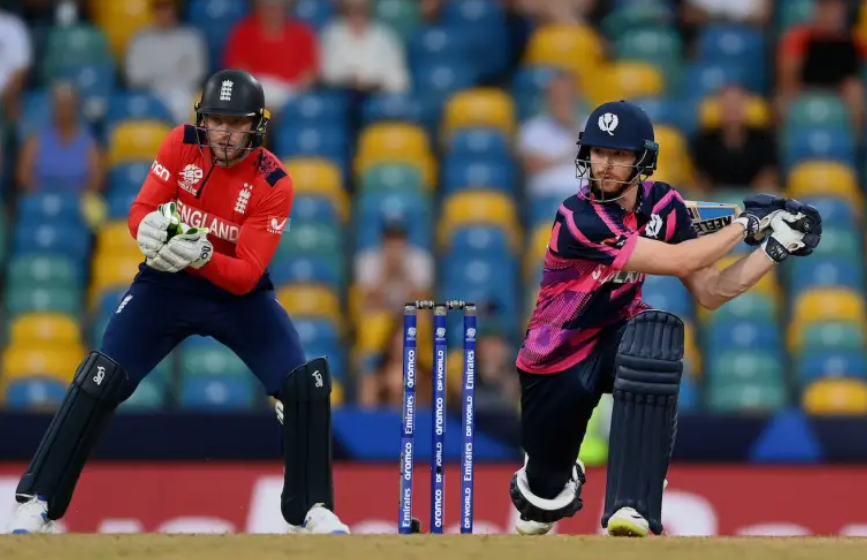
The cricket encounters between England and Scotland have developed into a compelling story of contrast, growth, and competitive spirit. While England entered the contests with a long-established cricket system and global dominance, Scotland approached each match with determination and the ambition to close the gap. Over the years, their meetings have reflected changing strategies, evolving player skills, and shifting momentum in limited-overs cricket. From early mismatches to more competitive modern games, the journey highlights how associate nations can challenge elite teams in bursts of brilliance. This timeline captures key matches, performances, and turning points that shaped their cricket relationship across formats and eras.
Latest Matches
Date
Match Format
Venue
Winner
Margin
14 Feb 2026
T20I
Eden Gardens, Kolkata
England
5 wickets
04 Jun 2024
T20I
Kensington Oval, Barbados
No Result
Abandoned
10 Jun 2018
ODI
The Grange Club, Edinburgh
Scotland
6 runs
23 Feb 2015
ODI
Hagley Oval, Christchurch
England
119 runs
09 May 2014
ODI
Mannofield Park, Aberdeen
England
39 runs
All-Time Head-to-Head Record
Format
Matches Played
England Won
Scotland Won
No Result
Ties
One Day Internationals
5
3
1
1
0
T20 Internationals
2
1
0
1
0
Total Combined
7
4
1
2
0
All-Time Batting Leaders
Player
Team
Matches
Innings
Runs
Highest Score
Average
Strike Rate
Calum MacLeod
Scotland
4
4
215
140
71.66
112.56
Jonny Bairstow
England
2
2
133
105
66.50
162.19
Kyle Coetzer
Scotland
4
4
121
71
30.25
73.78
Moeen Ali
England
3
2
128
128
64.00
121.90
Matthew Cross
Scotland
4
3
82
48
27.33
92.13
Eoin Morgan
England
3
2
61
40
30.50
95.31
George Munsey
Scotland
2
2
65
41
65.00
135.41
All-Time Bowling Leaders
Player
Team
Matches
Overs
Wickets
Best Bowling
Average
Economy Rate
Mark Watt
Scotland
3
21.0
5
3/55
22.40
5.33
Chris Sole
Scotland
2
14.0
4
2/42
24.50
7.00
Adil Rashid
England
3
18.0
4
2/31
26.25
5.83
Safyaan Sharif
Scotland
4
27.4
4
2/46
41.25
5.96
Chris Woakes
England
2
15.0
3
2/45
28.33
5.66
Jofra Archer
England
2
7.0
2
2/28
21.50
6.14
Early Cricket Foundations and Uneven Growth
Cricket development in England and Scotland followed very different paths, shaping a natural imbalance in early encounters between the two sides. England built its structure around county cricket, producing a deep talent pool and a highly competitive domestic system. Scotland, on the other hand, developed its cricket identity with limited international exposure and fewer professional opportunities. This difference influenced how early matches unfolded, with England often dictating terms through stronger batting depth and disciplined bowling units. Scotland relied heavily on individual brilliance rather than team consistency, which made early fixtures challenging. However, these matches were crucial in laying the foundation of competitive spirit. Over time, Scotland began to refine its domestic setup, investing in coaching and exposure tours. This early phase set the tone for a rivalry defined not just by results but by development gaps and evolving ambition.
Year
Match Type
England Strength
Scotland Challenge
Outcome Pattern
1990
Friendly
High depth
Limited experience
England dominant
1995
ODI Warmup
Strong batting
Inconsistent bowling
One-sided
2000
ICC event
Balanced squad
Emerging talent
Competitive spells
2005
ODI
Tactical control
Batting reliance
England advantage
First International Meetings and Competitive Awakening
The first recognized international meetings between the two sides marked a significant step in Scottish cricket visibility. These encounters were not just matches but learning experiences for Scotland against an established cricket powerhouse. England entered these games with experimental squads at times, yet still maintained control due to superior technique and match awareness. Scotland showed early signs of resilience, especially in bowling spells where disciplined line and length occasionally restricted scoring. However, batting collapses under pressure often prevented them from converting promising starts into competitive totals. These early games helped Scotland understand international intensity and required fitness standards. England, meanwhile, used these fixtures to test bench strength and tactical variations. Despite predictable outcomes, these meetings slowly built a narrative of growth and exposure rather than rivalry equality.
Year
Venue
England Approach
Scotland Response
Match Flow
1999
England
Experimental XI
Defensive play
Controlled
2001
Scotland
Full strength
Learning phase
One-sided
2006
Neutral
Tactical testing
Middle-order fight
Moderate
2010
England
Rotated squad
Improved bowling
Competitive bursts
Development of Scottish Identity in International Cricket
As international exposure increased, Scotland began forming a clearer cricket identity. The focus shifted toward building structured partnerships and improving death bowling efficiency. Players started gaining experience through global leagues, which helped bridge the skill gap. England, meanwhile, evolved into a more aggressive white-ball side, emphasizing fast scoring and dynamic fielding strategies. This contrast created interesting match dynamics where Scotland often tried to slow the game, while England pushed acceleration. Although results still favored England, Scotland’s performances became more respectable over time. Certain matches showed Scotland holding England under pressure for longer periods, especially in the middle overs. This phase was crucial in transforming Scotland from underdogs into a team capable of challenging top-tier sides in patches.
Year
Key Improvement
Scotland Focus
England Strategy
Competitive Level
2008
Batting depth
Partnerships
Aggressive start
Moderate
2012
Bowling control
Economy rates
Power hitting
England edge
2015
Fielding boost
Fitness
Rotation policy
Competitive
2017
T20 exposure
Finishing
High strike rate
Balanced
ODI Encounters and Tactical Shifts
One Day International matches between the two sides highlighted evolving strategies. England’s batting philosophy became centered on aggressive starts and sustained pressure throughout the innings. Scotland countered with structured bowling rotations and attempts to build dot-ball pressure. While England often posted or chased high totals, Scotland occasionally disrupted rhythm through early breakthroughs. However, lack of consistent finishing power remained a challenge for Scotland. England’s ability to recover from early wickets gave them a strong psychological advantage. These ODIs also showcased Scotland’s growing discipline in field placements and bowling variations. Despite the gap, the tactical contrast made matches engaging for viewers and analysts.
Year
Format
England Score Range
Scotland Score Range
Key Factor
2014
ODI
280–320
220–260
Batting depth
2016
ODI
300+
240–270
Powerplay impact
2018
ODI
250–300
250+ competitive
Middle overs
2020
ODI
310+
260–280
Death overs
Memorable Edinburgh Encounter and Near Shock Result
One of the most memorable matches took place in Edinburgh, where Scotland delivered one of their finest batting performances. They posted a massive total driven by fearless stroke play and strong partnerships in the middle overs. England, known for chasing high scores, faced unexpected pressure as early wickets created tension. The crowd energy intensified as Scotland sensed an upset. However, England’s experienced middle order stabilized the innings and gradually regained control. The match remained uncertain until the final overs, making it one of the closest encounters in their history. Scotland earned widespread respect despite narrowly missing victory, proving they could challenge elite teams under pressure.
Team
Runs
Top Scorer
Best Bowler
Result Margin
Scotland
370+
Top order batter
Seam bowler
Narrow loss
England
374/6
Middle order star
Spin control
Win
Venue
Edinburgh
Crowd Impact
High pressure
Thriller
Match Type
ODI
Turning Point
Middle overs
Chase win
Tactical Evolution and Modern White-Ball Influence
Modern cricket strategies significantly changed how both teams approached encounters. England adopted a high-tempo batting philosophy, focusing on boundary-heavy overs and deep batting lineups. Scotland emphasized tactical discipline, relying on controlled bowling spells and calculated batting progression. The introduction of analytics and match data further refined decision-making. England’s adaptability allowed them to rotate strike and accelerate at will, while Scotland worked on minimizing damage during powerplays. Fielding standards improved across both teams, making matches more competitive in shorter formats. This tactical evolution ensured that even one-sided scorecards often contained periods of genuine contest.
Aspect
England Approach
Scotland Approach
Effectiveness
Modern Impact
Batting
Aggressive
Structured
High vs moderate
Balanced
Bowling
Variation-heavy
Economy-focused
Strong control
Competitive
Fielding
Elite level
Improved
High intensity
Faster game
Strategy
Data-driven
Situational
Adaptive
Evolving
Player Rivalries and Individual Brilliance
Individual performances played a crucial role in shaping encounters. England’s top-order batters frequently dominated scoring charts with explosive innings, while Scotland’s bowlers occasionally produced breakthroughs that shifted momentum. Middle-order resilience from Scotland also stood out in certain matches, especially when chasing large targets. England’s bowling unit, known for pace and variation, often tested Scotland’s batting depth. These player battles added intensity to the rivalry, even when overall results leaned heavily toward England. Each match produced moments where individual brilliance briefly overshadowed team dominance, keeping fans engaged throughout.
Player Role
England Strength
Scotland Strength
Key Contribution
Match Impact
Batters
Power hitting
Stability
High scoring
Game control
Bowlers
Pace attack
Swing bowling
Early wickets
Momentum shift
All-rounders
Balance
Utility role
Dual impact
Tactical value
Fielders
Elite coverage
Improving skill
Run saving
Pressure build
Statistical Patterns and Match Insights
Statistical analysis across matches shows a consistent pattern of England dominance, especially in batting depth and scoring rate. Scotland, however, demonstrated gradual improvement in economy rates and partnership building. Average first innings totals favored England significantly, reflecting their aggressive approach. Scotland’s best performances often came in conditions favoring seam movement or slower pitches. Bowling statistics highlight England’s ability to take wickets at regular intervals, preventing opposition recovery. Despite gaps, Scotland’s progression is visible in reduced margins and improved competitive phases over time.
Metric
England Average
Scotland Average
Difference
Insight
First Innings Score
310+
240+
High gap
Batting strength
Strike Rate
High
Moderate
Clear edge
Aggression
Economy Rate
Controlled
Improving
Narrowing
Bowling growth
Win Margin
Large
Narrow losses
Competitive rise
Progress trend
Conclusion
The overall timeline of encounters between England and Scotland reflects more than just results on a scorecard. It tells the story of cricket development, experience gaps, and gradual competitive improvement. England’s consistency, depth, and tactical strength have often defined outcomes, but Scotland’s progress has added meaningful contest and occasional pressure moments. Each match contributed to building respect and understanding between the two sides. While England continues to hold the upper hand, Scotland’s journey shows clear signs of growth and resilience. Future encounters promise more balanced competition as experience and exposure continue to shape both teams in international cricket.