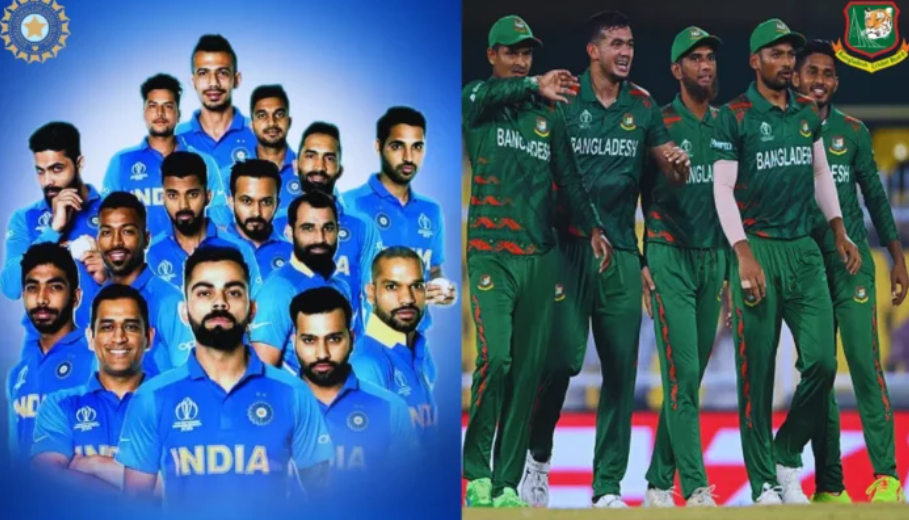
Cricket rivalries in South Asia often go beyond the boundary lines, shaped by emotion, history, and shifting power dynamics. Whenever these two teams meet, the contest carries a unique intensity built over years of evolving competition. What began as a one sided affair gradually transformed into a more balanced and unpredictable battle. Early matches reflected experience against ambition, while later encounters showcased growing skill, confidence, and tactical maturity from both sides. Fans from both nations added fuel to the atmosphere, turning every fixture into a high pressure event. Over time, these clashes have produced unforgettable moments that define modern cricket rivalry.
Recent Matches Table
Date
Tournament
Format
Venue
Winner
Margin
Location
24 September 2025
Asia Cup
T20I
Dubai
India
41 runs
UAE
20 February 2025
Champions Trophy
ODI
Dubai
India
6 wickets
UAE
12 October 2024
Bilateral Series
T20I
Hyderabad
India
133 runs
India
9 October 2024
Bilateral Series
T20I
Delhi
India
86 runs
India
6 October 2024
Bilateral Series
T20I
Gwalior
India
7 wickets
India
1 October 2024
Bilateral Series
Test
Kanpur
India
7 wickets
India
23 September 2024
Bilateral Series
Test
Chennai
India
280 runs
India
Team Statistics Summary Table
Format
Matches Played
India Wins
Bangladesh Wins
No Result
Tied
Draw
Test
15
13
0
0
0
2
ODI
42
33
8
1
0
0
T20I
18
17
1
0
0
0
Overall
75
63
9
1
0
2
Home (India)
16
15
1
0
0
0
Away (Bangladesh)
35
28
5
1
0
1
Neutral Venue
24
20
3
0
0
1
Individual Batting Records Table
Player Name
Country
Formats Played
Total Runs
Highest Score
Batting Average
Centuries
Virat Kohli
India
Test, ODI, T20I
1618
204
67.41
6
Rohit Sharma
India
Test, ODI, T20I
1282
137
42.73
4
Mushfiqur Rahim
Bangladesh
Test, ODI, T20I
1184
127
33.82
2
Sachin Tendulkar
India
Test, ODI
1143
248
63.50
5
Shakib Al Hasan
Bangladesh
Test, ODI, T20I
1096
143
29.62
1
Tamim Iqbal
Bangladesh
Test, ODI, T20I
985
151
31.77
1
Sourav Ganguly
India
Test, ODI
784
135
56.00
2
Individual Bowling Records Table
Player Name
Country
Formats Played
Total Wickets
Best Bowling
Economy Rate
Five Wicket Hauls
Shakib Al Hasan
Bangladesh
Test, ODI, T20I
48
5/62
4.21
1
Ravichandran Ashwin
India
Test, ODI, T20I
41
6/82
3.48
3
Mustafizur Rahman
Bangladesh
ODI, T20I
34
6/43
5.12
2
Zaheer Khan
India
Test, ODI
32
7/87
3.85
2
Mashrafe Mortaza
Bangladesh
Test, ODI, T20I
29
4/38
4.95
0
Ishant Sharma
India
Test, ODI
25
5/22
3.20
2
Umesh Yadav
India
Test, ODI, T20I
24
5/53
4.10
1
Early International Meetings
The earliest encounters between the two sides reflected a clear gap in experience and confidence. One team entered the stage with a long-established structure, while the other was still finding its identity at the highest level. These matches were often one sided in terms of results, but they played a crucial role in shaping future competitiveness. The developing side showed glimpses of resistance through small partnerships and disciplined spells, even when the overall outcome was predictable. Over time, these early fixtures built emotional intensity among supporters, especially as expectations slowly began to shift. Senior players from the dominant team often controlled proceedings with ease, yet the underdog’s ability to survive longer in innings signaled a quiet evolution. These early meetings laid the foundation for a rivalry that would later become far more balanced and emotionally charged across formats.
Year
Format
Winner
Margin
Key Highlight
1990s
ODI
Established side
Large
One sided dominance
Early 2000s
ODI
Established side
Medium
First competitive spells
Early 2000s
ODI
Established side
Medium
Improved batting resistance
Early 2000s
ODI
Established side
Small
Longer partnerships formed
Early 2000s
ODI
Established side
Medium
Emerging confidence shown
Rising Competition Phase
As time progressed, matches between the two teams started showing a noticeable shift in competitiveness. The gap in skill levels began to reduce, especially in limited overs formats where momentum plays a major role. The once inexperienced side started to challenge stronger opponents with more structured batting and sharper bowling plans. This phase was defined by unexpected pressure moments, where established players were forced to work harder for control. Fielding standards improved significantly, and middle order resilience became a key feature of contests. Although results still often favored the stronger unit, the matches were no longer comfortable walkovers. Each encounter carried a sense of unpredictability, and fans began to anticipate closer finishes. This period marked the transformation from a predictable matchup into a developing rivalry that demanded strategic depth from both teams.
Year Range
Format
Winner Trend
Competition Level
Key Change
Mid 2000s
ODI
Dominant side
Moderate
Improved batting depth
Mid 2000s
ODI
Dominant side
Moderate
Better bowling control
Mid 2000s
ODI
Mixed
Increasing
Closer middle overs
Mid 2000s
ODI
Dominant side
Moderate
Fielding upgrades
Mid 2000s
ODI
Mixed
Rising
Tactical awareness growth
Breakthrough Global Tournament Shock
A major turning point arrived during a global tournament where expectations were heavily tilted toward the established team. However, the match unfolded in an unexpected direction, shocking fans and analysts alike. The underdog displayed fearless batting approach and composed chase strategy, dismantling the pressure of reputation. Early breakthroughs in bowling gave them control, while middle order batters built crucial partnerships. The stronger side struggled with consistency and failed to recover from early setbacks. This match became symbolic of a changing era, where confidence began to replace fear. It also marked the emergence of several future stars who would define the next decade of competition. The emotional impact was massive, especially among supporters who witnessed a historic shift in momentum. From that moment onward, every future meeting carried added psychological weight.
Tournament
Stage
Winner
Key Performer
Turning Point
Global Event
Group
Underdog
Young batter
Top order collapse
Global Event
Group
Underdog
All rounder
Strong partnership
Global Event
Group
Underdog
Spinner
Middle overs control
Global Event
Group
Underdog
Captain
Tactical chase
Global Event
Group
Underdog
Bowler
Early breakthroughs
Rebuilding and Adaptation
Following that historic shift, the stronger team entered a rebuilding phase focused on correcting tactical weaknesses and strengthening bench depth. Selection strategies evolved, with greater emphasis on consistency and adaptability. Batting order stability became a priority, while bowlers were trained for specific match situations. The opposing side also continued improving, making contests more balanced. This phase saw frequent experimentation, especially in field placements and bowling rotations. Matches became more strategic, with both teams analyzing each other more deeply than before. While dominance still existed in parts, it was no longer absolute. Each game required full effort, and small mistakes often decided outcomes. The rivalry became less about expectation and more about execution under pressure.
Season
Focus Area
Improvement
Outcome
Observation
Early rebuild
Batting stability
High
Better starts
Reduced collapses
Early rebuild
Bowling depth
Medium
Controlled spells
Fewer leaks
Mid phase
Fielding
High
Sharp execution
Saved runs
Mid phase
Strategy
High
Tactical clarity
Better planning
Mid phase
Bench strength
Medium
Rotation success
Squad balance
Knockout High Pressure Encounter Era
In high stakes tournament matches, pressure became the defining factor. One side consistently demonstrated experience in handling knockout situations, while the other showed flashes of brilliance but struggled with consistency. Batting under pressure often dictated results, with top order performance playing a decisive role. Bowlers from both sides delivered impactful spells, but execution in death overs became critical. These matches were closely followed worldwide due to their unpredictable nature. Emotional tension was high, and every mistake was magnified. Despite occasional resistance, experience usually prevailed in these encounters. However, the improving side earned respect for pushing matches deeper than before.
Event
Stage
Winner
Key Moment
Pressure Factor
ICC event
Knockout
Experienced side
Century innings
High
ICC event
Knockout
Experienced side
Early wickets
Very high
ICC event
Knockout
Experienced side
Middle order recovery
High
ICC event
Knockout
Experienced side
Death overs control
Very high
ICC event
Knockout
Experienced side
Field discipline
High
T20 Last Over Drama Phase
Short format encounters introduced an entirely new level of unpredictability. Matches often went down to the final over, where execution under pressure became everything. Both teams displayed aggressive intent from the start, with rapid scoring and innovative shot selection. Bowling attacks had to adapt quickly to changing conditions. Fielding errors and moments of brilliance often decided outcomes within seconds. The emotional intensity of these matches made them highly memorable for fans. Even when results favored one side more often, the margins were extremely narrow. This phase added a dramatic layer to the rivalry that kept audiences engaged until the very last ball.
Match Type
Final Over
Winner
Key Performer
Margin
T20
Yes
Stronger side
Finisher
Close
T20
Yes
Mixed
Bowler
Very close
T20
Yes
Stronger side
Batter
Narrow
T20
Yes
Stronger side
All rounder
Tight
T20
Yes
Mixed
Captain
Minimal
Modern Era and Current Balance
In recent years, the rivalry has matured into a more balanced contest. While one team still maintains overall dominance, the other has significantly reduced the gap through improved skill development and strategic planning. Matches are now more competitive across all formats, with both sides capable of winning on their day. Emerging players have added freshness, and experienced campaigners continue to anchor performances. Data analytics and modern training methods have influenced decision making on both sides. Fans now expect closer contests rather than predictable outcomes. The rivalry continues to evolve, reflecting the growth of both cricketing systems.
Phase
Format Strength
Winner Trend
Competitiveness
Key Factor
Modern
ODI
Balanced
High
Depth improvement
Modern
T20
Mixed
High
Finishing skills
Modern
Test
Dominant side
Medium
Experience gap
Modern
ODI
Competitive
High
Tactical growth
Modern
T20
Competitive
High
Young talent rise
Conclusion
The journey between these two sides reflects how sport evolves through time, competition, and belief. From early dominance to fiercely contested modern encounters, the balance has shifted in ways few initially expected. Each phase added new layers of drama, whether through breakout performances, tactical battles, or last over finishes. While one team has often held the upper hand, the other has consistently narrowed the gap through determination and growth. Today, every meeting is approached with respect and caution, as both sides understand the stakes. This rivalry continues to grow, promising even more intense chapters in the years ahead.