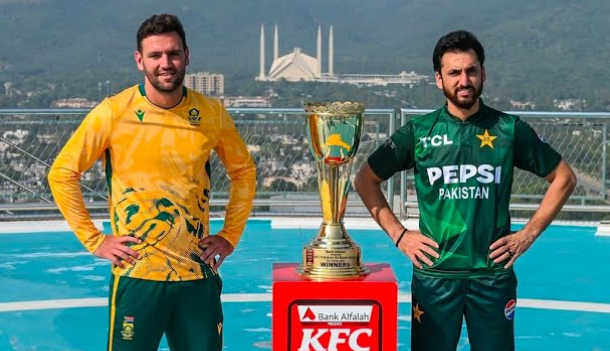
Cricket history has witnessed many intense international rivalries, but few have evolved as steadily and competitively as the encounters between these two sides. From their earliest meetings after international readmission to the modern era of T20 dominance, the contests have consistently delivered drama, pressure, and unforgettable moments. Each era brought a new style of play, shaped by changing formats, emerging stars, and shifting strategies. Fast bowlers, world class batters, and tactical innovations have all played a role in defining the journey. Over time, the rivalry transformed from unpredictable early clashes into a balanced and highly competitive cricket battle admired by fans worldwide.
Recent Matches Table
Match Date
Match Format
Venue City
Winning Team
Winning Margin
First Innings Score
Second Innings Score
12 October 2025
Test Match
Lahore
Pakistan
93 runs
378 and 167
269 and 183
20 October 2025
Test Match
Rawalpindi
South Africa
8 wickets
333 and 138
404 and 73/2
28 October 2025
T20I
Rawalpindi
South Africa
55 runs
194/9
139
31 October 2025
T20I
Lahore
Pakistan
9 wickets
110
112/1
01 November 2025
T20I
Lahore
Pakistan
4 wickets
139/9
140/6
04 November 2025
ODI
Faisalabad
Pakistan
2 wickets
263
264/8
06 November 2025
ODI
Faisalabad
South Africa
8 wickets
269/9
270/2
Team Statistics Summary Table
Format
Total Head to Head
Played in Pakistan
Played in South Africa
Neutral Venues
Pakistan Wins
South Africa Wins
Test Matches
34
14
18
2
8
16
One Day Internationals
91
23
44
24
37
54
Twenty20 Internationals
30
11
15
4
16
14
ICC World Cup
6
0
0
6
2
4
T20 World Cup
4
0
0
4
3
1
Champions Trophy
3
0
0
3
1
2
Overall Combined
155
48
77
30
61
84
Individual Batting Records Table
Player Name
Team Represented
Total Matches
Total Runs
Highest Score
Batting Average
Strike Rate
Babar Azam
Pakistan
32
1428
122
44.62
92.15
Quinton de Kock
South Africa
28
1215
123
43.39
98.40
Saim Ayub
Pakistan
12
485
77
40.41
118.29
Shan Masood
Pakistan
8
340
85
42.50
52.10
Ryan Rickelton
South Africa
6
310
102
51.67
86.21
Reeza Hendricks
South Africa
15
494
74
35.28
124.30
David Miller
South Africa
24
682
85
37.88
136.50
Individual Bowling Records Table
Player Name
Team Represented
Overs Bowled
Total Wickets
Best Bowling
Bowling Average
Economy Rate
Shaheen Afridi
Pakistan
184.2
45
4/64
24.35
4.88
Keshav Maharaj
South Africa
212.4
42
5/47
25.11
3.12
Abrar Ahmed
Pakistan
88.0
22
4/27
22.40
3.45
Noman Ali
Pakistan
114.5
26
6/102
23.15
2.80
George Linde
South Africa
64.0
18
4/23
18.55
5.20
Corbin Bosch
South Africa
48.0
14
3/23
17.85
5.50
Salman Mirza
Pakistan
22.0
8
3/15
16.50
3.75
Early encounters after international readmission
The early phase of meetings between these two sides began after a long gap in global cricket participation for one of them, creating a fresh competitive atmosphere. The first few clashes carried curiosity, tension, and a sense of unpredictability. One team brought structure, discipline, and a methodical approach, while the other relied on natural flair, aggressive stroke play, and fast bowling bursts that could change a session quickly. These matches were not just about results but about establishing identity on the world stage. Every early encounter felt like a learning curve where both sides tested each other’s strengths and weaknesses. Bowlers targeted top-order batters with short-pitched deliveries, while batters tried to adapt to pace and bounce variations. Fans from both nations began to notice a growing competitive edge, setting the foundation for a rivalry that would slowly gain intensity over the years.
Year
Format
Venue
Winner
Key Performer
1992
ODI
Durban
South Africa
Allan Donald
1993
ODI
Lahore
Pakistan
Wasim Akram
1994
Test
Johannesburg
South Africa
Hansie Cronje
1995
ODI
Karachi
Pakistan
Inzamam-ul-Haq
First ODI battles tactical contrast
As one-day cricket became more strategic in the 1990s, the meetings between these two teams highlighted a sharp tactical contrast. One side emphasized disciplined bowling plans, tight field placements, and calculated batting chases, while the other often depended on individual brilliance and sudden momentum shifts. These ODI battles became a testing ground for middle-order stability and death-over execution. Fast bowlers dominated early overs, extracting movement and bounce, while spinners played a crucial role in controlling the middle phase. Matches often swung within a few overs, especially when set batters were dismissed unexpectedly. Fielding standards also became a major talking point, as saves and run-outs influenced outcomes. The rivalry grew stronger as each ODI added new tactical lessons for both camps, forcing continuous evolution in strategy and player roles.
Year
Format
Venue
Winner
Key Performer
1996
ODI
Cape Town
South Africa
Jonty Rhodes
1997
ODI
Rawalpindi
Pakistan
Saeed Anwar
1998
ODI
Port Elizabeth
South Africa
Jacques Kallis
1999
ODI
Sharjah
Pakistan
Shahid Afridi
World tournament pressure clash
Matches in global tournaments brought a completely different level of intensity, where pressure often defined outcomes more than form or rankings. In these high-stakes encounters, both sides faced immense expectations from fans and media. Batting collapses under pressure were not uncommon, especially when early wickets fell in quick succession. Bowlers thrived in these conditions, using nerves and tension to force mistakes. One side often relied on experienced campaigners to anchor innings, while the other trusted a balanced unit capable of controlling both powerplay and death overs. The emotional weight of tournament cricket added another layer to the rivalry, with every run celebrated loudly and every wicket shifting momentum dramatically. These clashes became defining moments in ICC events, remembered for their intensity rather than just statistics.
Year
Format
Venue
Winner
Key Performer
1999
ODI
Manchester
Pakistan
Saqlain Mushtaq
2003
ODI
Centurion
South Africa
Gary Kirsten
2007
ODI
Birmingham
South Africa
AB de Villiers
2011
ODI
Mohali
Pakistan
Umar Gul
Fast bowling dominance era
This phase of competition is remembered for fierce fast bowling battles where both sides produced world-class pacers capable of turning matches within a spell. One attack relied heavily on reverse swing and aggression at the crease, while the other combined raw pace with relentless accuracy. Batters were often tested with short balls, yorkers, and seam movement under different conditions. Many matches saw top-order collapses triggered by early breakthroughs, making partnerships crucial for survival. This era also highlighted the mental strength of batters who could withstand sustained pressure from elite bowling units. Conditions played a major role, with pitches in different venues offering varying assistance to pace attacks. The rivalry during this period was shaped more by bowlers than batters, creating low-scoring but highly competitive contests that fans still remember vividly.
Year
Format
Venue
Winner
Key Performer
2000
Test
Lahore
Pakistan
Waqar Younis
2002
Test
Cape Town
South Africa
Shaun Pollock
2004
ODI
Durban
South Africa
Makhaya Ntini
2005
Test
Karachi
Draw
Shoaib Akhtar
Transition era and emerging stars
As cricket evolved in the 2000s, both teams entered a transition phase marked by the rise of new generation players. This period saw the emergence of technically strong batters who could adapt to both pace and spin, along with bowlers who focused more on consistency and control rather than pure speed. One side developed a strong middle order anchored by experienced leaders, while the other introduced dynamic all-rounders capable of changing games in multiple departments. Fielding became a defining factor, with athletic standards rising significantly. Matches during this phase were often closely contested, with small margins deciding outcomes. The rivalry became more balanced as both teams adapted to modern cricket demands, including improved fitness levels, sharper strategies, and data-driven planning.
Year
Format
Venue
Winner
Key Performer
2006
ODI
Johannesburg
South Africa
Jacques Kallis
2007
T20
Durban
Pakistan
Shahid Afridi
2008
ODI
Karachi
Pakistan
Younis Khan
2009
Test
Centurion
South Africa
Dale Steyn
T20 format transformation phase
The introduction of the shortest format changed the dynamics of this rivalry completely. Matches became faster, more aggressive, and heavily dependent on momentum swings. Batters played with higher intent from the first ball, while bowlers focused on variations like slower balls, yorkers, and cutters. One side adapted quickly with explosive hitters capable of accelerating the scoring rate, while the other relied on disciplined bowling units and structured batting plans. These encounters often produced thrilling finishes, sometimes going down to the last over. Crowd energy and pressure situations played a huge role, making even small partnerships or breakthroughs extremely valuable. The unpredictability of the format ensured that neither side could dominate consistently, keeping the rivalry fresh and highly competitive.
Year
Format
Venue
Winner
Key Performer
2007
T20
Johannesburg
Pakistan
Mohammad Asif
2012
T20
Dubai
South Africa
Faf du Plessis
2013
T20
Lahore
Pakistan
Umar Akmal
2016
T20
Cape Town
South Africa
Imran Tahir
Conclusion
The journey between these two cricketing nations reflects the evolution of modern international cricket itself. What began as irregular early encounters gradually turned into a structured and high intensity rivalry shaped by tactical growth, format changes, and player excellence. From fast bowling duels to modern power hitting battles, every phase added new layers to the competition. Neither side has maintained complete dominance, which has kept the rivalry alive and engaging across decades. Today, it stands as a symbol of respect, competitiveness, and cricketing evolution, continuing to deliver closely fought matches that fans eagerly anticipate in every ICC event and bilateral series.